
Why is personal protective equipment essential in diagnostic imaging?
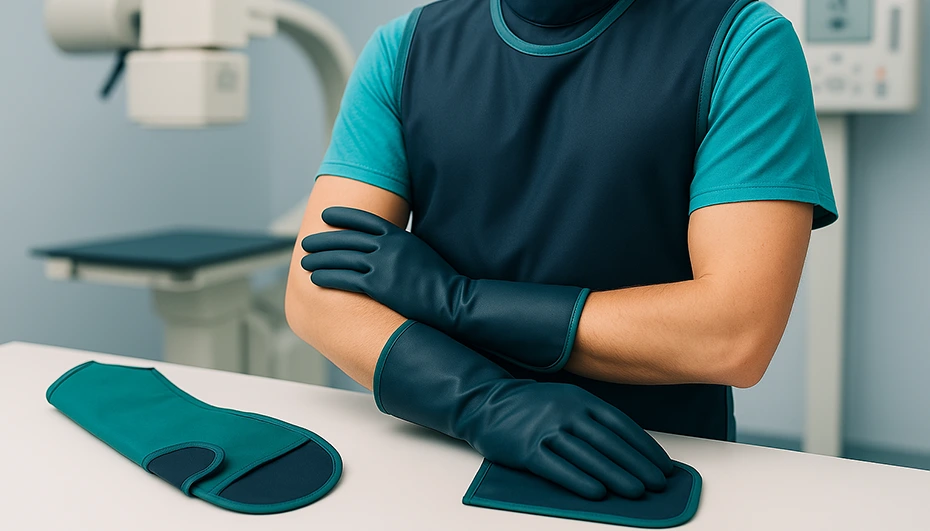
Modern diagnostic imaging relies on advanced technologies that help detect diseases at very early stages. However, behind this precision lies an invisible threat – ionizing radiation. Even the smallest doses, repeated daily, can affect the health of staff and patients. That’s why personal protective equipment (PPE) plays a key role today. See how to protect yourself and explore the PPE solutions available at Coradika.
Why diagnostic imaging involves risks
Ionizing radiation used in diagnostic imaging (X-ray, CT, fluoroscopy) is a powerful diagnostic tool. It helps doctors quickly detect fractures, tumors, degenerative changes, and more. But every examination exposes the body to radiation. For patients, it’s usually a one-time dose. Medical staff, however, are exposed almost daily.
The effects of radiation accumulate over time. Long-term exposure may lead to DNA damage, cellular mutations, cancer, fertility issues, cataracts, or neurological disorders. The more frequent the procedures, the greater the risk.
Are modern devices safe enough?
Many professionals assume that modern technology means reduced risk. It’s true that today’s devices are more efficient, but they do not eliminate exposure. Scattered radiation still exists – especially in fluoroscopy or panoramic dental exams. Even minimal exposure, repeated often, can be harmful.
For example, dental clinics may use low-dose devices, but with dozens of images daily, cumulative exposure becomes significant.
Personal protective equipment – an essential work tool
PPE includes items that create a physical barrier to radiation. Their purpose is to reduce the dose received by medical personnel or patients. Properly selected PPE can reduce exposure by several dozen percent.
What is considered PPE in diagnostic imaging?
Protective aprons (lead or lead-free), thyroid collars, chest and spine shields, lead gloves and hand protectors, arm and head shields, and pediatric protection capes are part of standard PPE.
All of these are available at Coradika in various models and sizes to fit different procedures and user needs.
When should PPE be used?
PPE must be used whenever there is a risk of exposure:
- During procedures with staff present
- Mobile imaging (bedside exams)
- Fluoroscopy and interventional procedures
- Dental and orthodontic diagnostics
- Veterinary exams.
In settings without full room shielding, personal protection is a must.
Comfort and ergonomics – a modern approach
Protective aprons are no longer stiff and heavy. Modern PPE like those from Coradika use lightweight materials such as lead-free Edge Bilayer, which provide full protection without discomfort. Many models are ergonomically designed for women or users who require more mobility.
Aprons should not restrict movement. It’s crucial to choose the right size and type of apron for your procedures and body shape.
PPE and professional responsibility
Not using PPE poses legal and health risks. According to regulations, employers must provide PPE, and employees must use it. Failure to comply can result in:
- Fines
- Loss of licenses
- Disciplinary action
- Civil liability in case of harm to patients
Supervisors and RT staff are equally accountable. Regular inspections and proper documentation are essential.
Caring for PPE – maintenance and storage
Even high-quality aprons degrade over time. Cracks or damage in protective layers can compromise safety. Routine inspections are necessary, even if no damage is visible.
Best practices:
- Store aprons hanging on designated racks
- Never fold or compress the material
- Avoid heat or humidity
- Inspect annually (e.g., using fluoroscopy)
- Label PPE with the date of the last inspection.
Patient protection – especially children
Protecting patients is just as important. Children, pregnant women, and frequently examined individuals require special care.
Coradika offers lightweight, pediatric aprons tailored for children’s size and anatomy. They protect the torso, neck, and spine effectively and should be standard in any pediatric imaging practice.
Conclusion – safety that pays off
PPE in diagnostic imaging is not an option – it’s essential. It protects health, reduces legal risk, and improves work comfort. Thanks to new technologies, PPE is now lighter, more effective, and more ergonomic.
The better you protect yourself and your patients, the longer and safer you can work. See Coradika’s full range of certified PPE at www.coradika.pl – choose safety that lasts.


